How to Survive Your First 24 Hours in the Marrakech Medina
Overwhelmed by the souks? Discover exactly how to survive your first 24 hours in the Marrakech Medina, from finding your riad to navigating the busy alleys.
The taxi stops at the edge of the old city walls. Your driver points to a narrow, dusty alleyway where cars can’t fit, unloads your bags, and drives away. You turn around, and instantly, a man with a wooden handcart is loading your luggage, motioning for you to follow him down a maze of terracotta walls while a motorbike buzzes past your ear.
Welcome to the old city. There is no gentle way to ease into this thousand-year-old walled labyrinth. It hits you all at once: the smell of cumin and exhaust, the hammering of metalworkers, the calls of street vendors, and the sheer density of human movement.
Many travelers feel a wave of panic during their first afternoon here. That is completely normal. The labyrinth is designed to disorient you. If you are wondering how to survive your first 24 hours in the Marrakech Medina, the secret is learning to read its rhythms. Here is exactly what to expect so you can drop the anxiety and let the adventure begin.
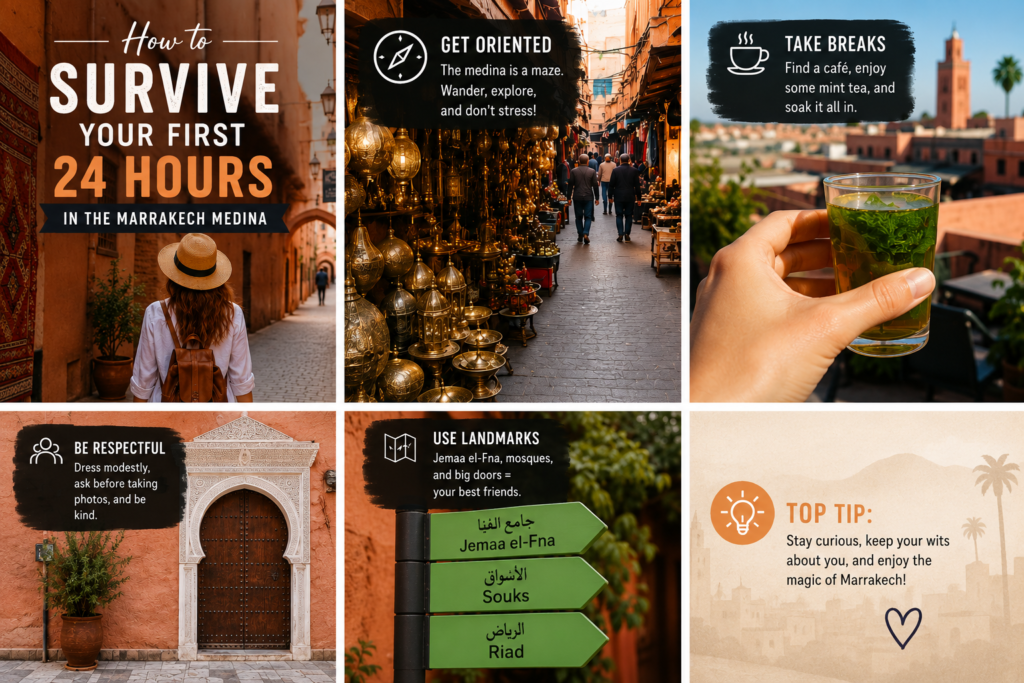
How to Survive Your First 24 Hours in the Marrakech Medina: A Step-by-Step Approach
The Riad Reset
Your first goal is simply getting to your accommodation. Most traditional riads sit behind heavy, unmarked wooden doors down alleys that look completely residential. Let the handcart porter guide you—it is worth the 20 or 30 dirhams you will tip him to not drag a rolling suitcase over cobblestones while consulting a failing GPS.
Stepping into a riad is a physical shock. The street noise vanishes instantly. The air is cooler, often scented with orange blossom, and there is usually a fountain trickling in the center of a tiled courtyard.
Do not rush back out. Sit down. Drink the sweet mint tea your host pours from high above the glass. Ask them to circle your location on a physical paper map. This downtime is crucial for resetting your nervous system before you tackle the souks.
Throw Away the Map (But Keep Your Phone Charged)
You are going to get lost. Accept this before you step back outside, and it will become part of the experience rather than a source of stress.
The tall walls and covered walkways of the souks mean your phone’s GPS will frequently bounce around or freeze. Offline maps like Maps.me can be slightly more reliable than Google Maps here, but your best navigation tool is your own observation.
Look up. You will often see signs pointing toward “Place Jemaa el-Fnaa” (the main square). If you ever feel truly turned around, just keep walking on the widest street you can find; it will eventually spit you out at a recognizable gate or the sprawling center.
Mastering the Motorbike Dance
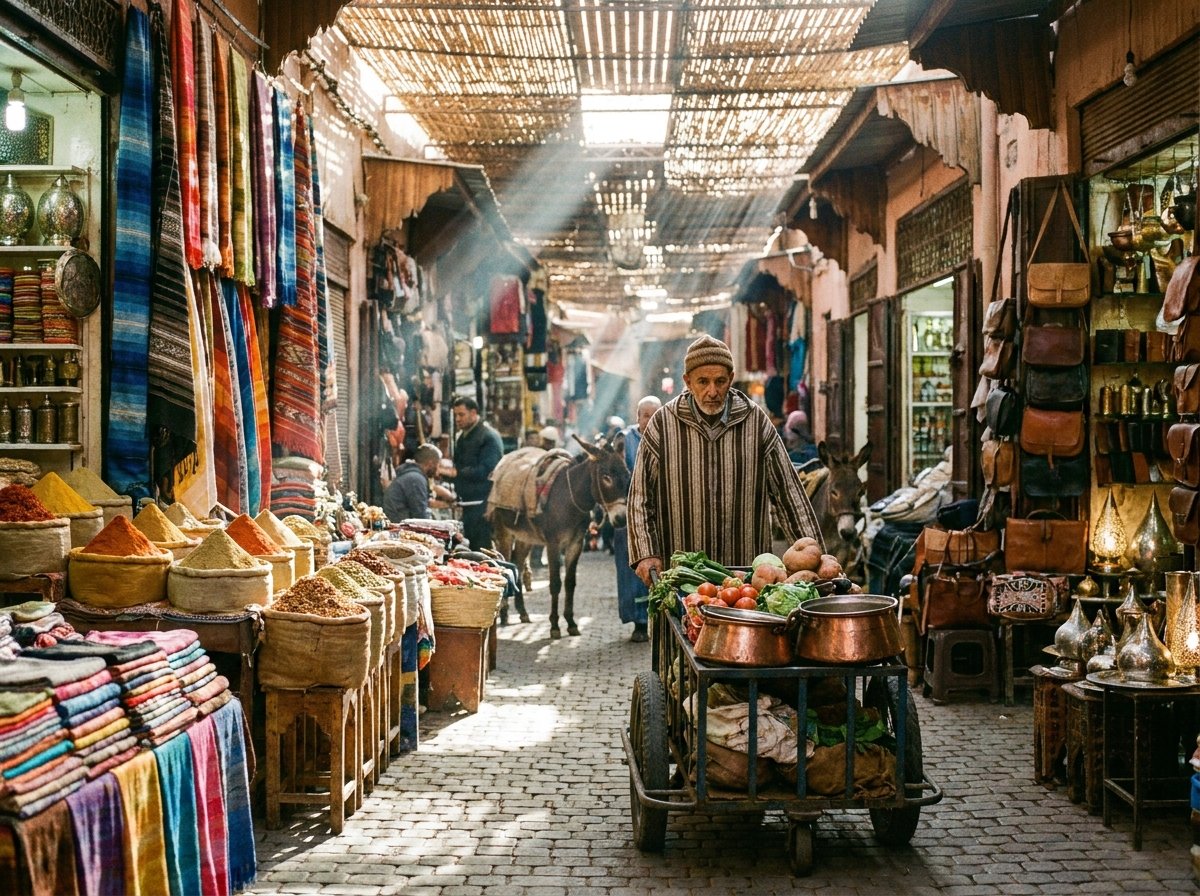
The single biggest shock for first-timers is the traffic. The alleys are narrow, yet they are shared by pedestrians, donkeys pulling carts, and a seemingly infinite number of mopeds.
The mopeds will not stop for you, but they also do not want to hit you. The local survival rule is simple: be predictable. Keep to the right side of the alley. If you hear an engine behind you, do not freeze or jump abruptly to the side. Just pull your shoulders in slightly and keep walking your line. The riders are incredibly skilled at threading the needle—just don’t make sudden changes in direction.
Navigating the “Helpful” Strangers
Within your first hour, someone will likely approach you and say one of three things:
- “The square is closed today.”
- “That road is a dead end.”
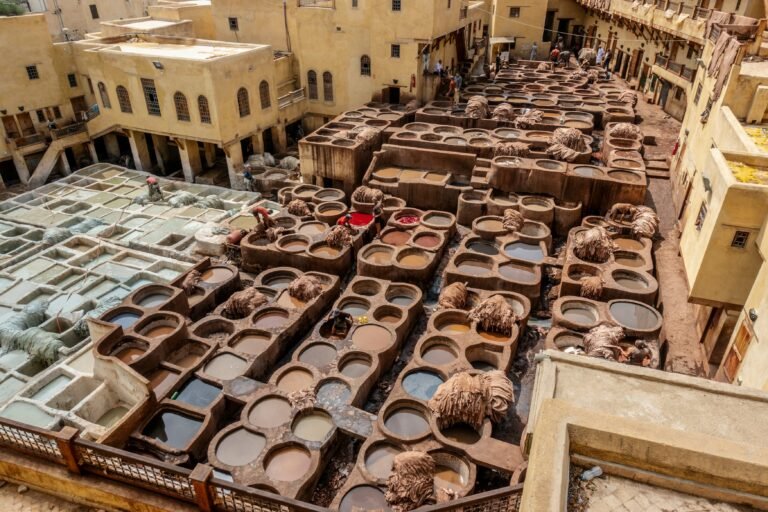
- “The tanneries are this way.”
This is the Medina’s most common hustle. Young men will offer unsolicited directions to assist you, leading you to a shop or a distant neighborhood, and then aggressively demand a heavy tip for their guide services.
The square is never closed. The road is likely not a dead end.
Handling this requires a specific attitude: polite, firm confidence. Do not ignore them completely, which can be seen as rude, but do not stop walking. Offer a smile, a firm “La, shukran” (No, thank you), break eye contact, and keep moving with purpose. If they follow for a few steps, just repeat it. They will quickly move on to a target who looks more uncertain.
Browsing Without Buying
During your first afternoon, treat the souks like a museum. Take in the hand-woven rugs, the brass lanterns, the mountains of spices, and the leather bags.
Shop owners are enthusiastic and will invite you in to look. If you stop to admire something, assume the negotiation has begun. If you are not ready to buy on day one, simply admire the work, compliment the shopkeeper, and keep walking. Save your dirhams and your bargaining energy for day two or three, once you have a better sense of what things cost and what you actually want to take home.
The Evening Shift
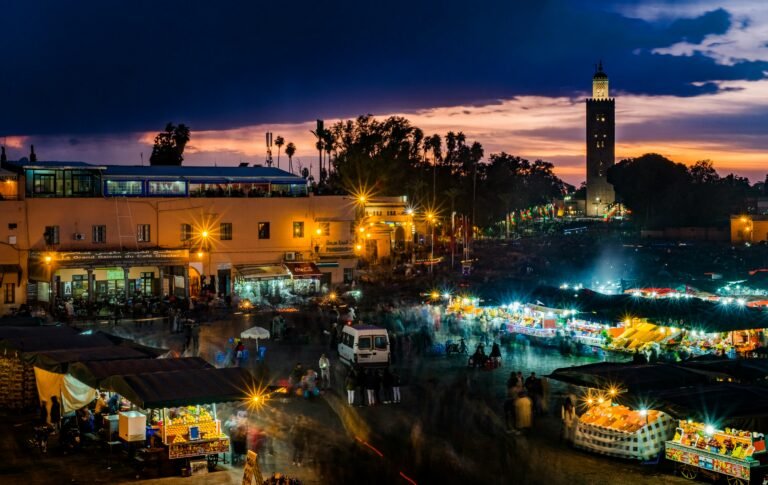
As the sun starts to drop, the energy of the city shifts entirely. The heat breaks, the lighting turns golden, and Jemaa el-Fnaa transforms from a massive open space into a dense theater of food stalls, storytellers, and musicians.
By this point, your senses have been working in overdrive all day. Instead of diving straight into the center of the crowd, find a rooftop café bordering the square. Order a coffee or a fresh orange juice, and watch the chaos unfold from above as the smoke from the grill stands catches the fading light.
You survived the arrival. You navigated the alleys. You dodged the mopeds. Tomorrow, you can start shopping, bargaining, and exploring deeper. Figuring out how to survive your first 24 hours in the Marrakech Medina really just comes down to embracing the unpredictability rather than fighting it.
Planning a trip to Morocco requires balancing logistics with the raw magic of the destination. If you want to experience the thrill of the ancient souks without the stress of organizing transport, finding unmarked doors, or worrying about train schedules, our curated Moroccan travel packages are designed to give you an immersive, seamless journey from the moment you land. Reach out to start shaping your itinerary.